First 24 Hours After a Flood in St. Petersburg
St. Petersburg, FL, USA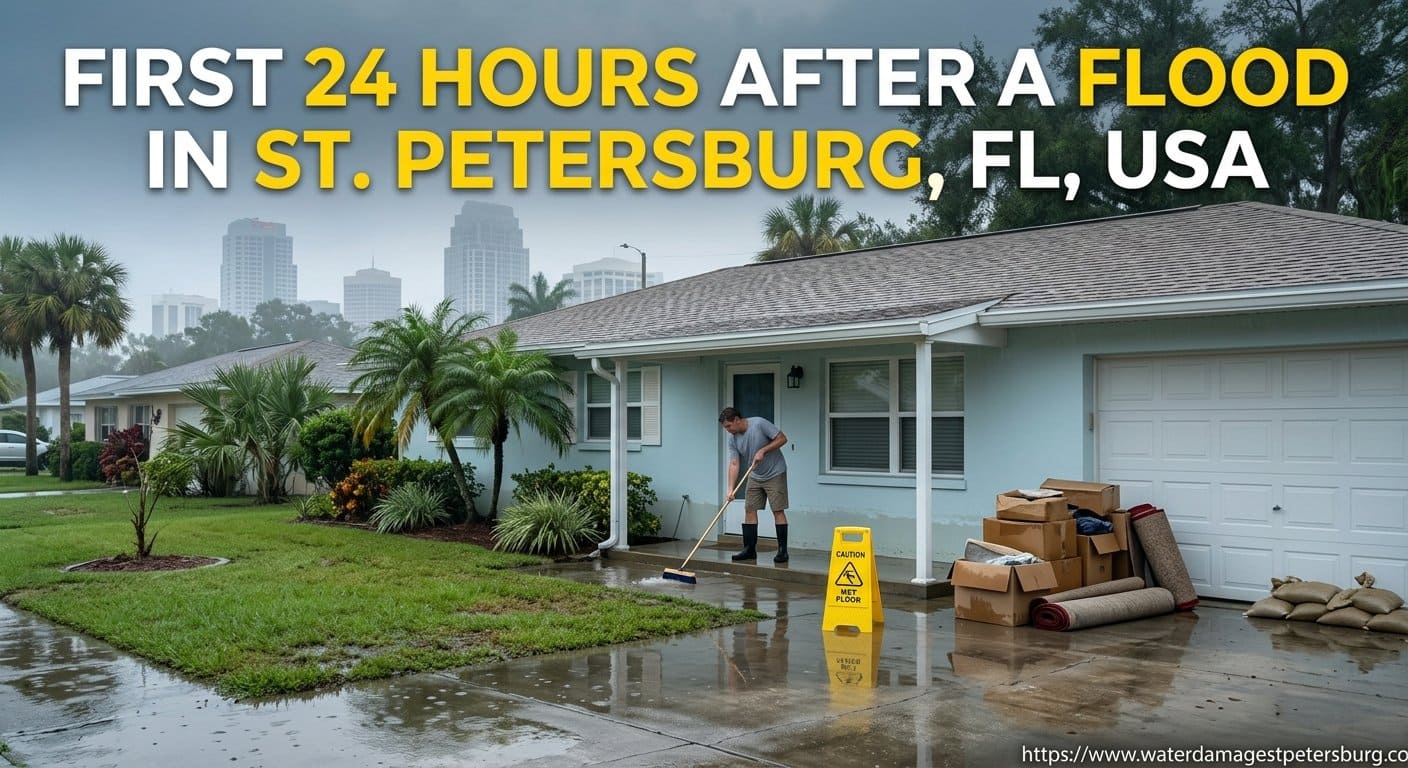
- UAC Water Damage St. Petersburg
- September 5, 2026
First 24 Hours After a Flood in St. Petersburg, FL, USA
When flood water crosses a doorway in St. Petersburg, the clock starts. Bay humidity, warm temperatures, and porous building materials mean standing water and damp walls do not wait politely for next week. The first day sets the tone for how bad secondary damage and mold become.
This guide gives homeowners in Old Northeast, Snell Isle, Shore Acres, Downtown, Kenwood, and Tyrone a clear sequence: stay safe, stop further damage, document, extract, and dry. For 24/7 help, call UAC Water Damage St. Petersburg at (727) 865-4384. We handle flood restoration and related drying across the city.
Hour 0 to 2: Safety Before Cleanup
Do not walk into a flooded room if outlets, cords, or appliances are submerged. Electricity and water are a lethal mix. If you can reach the main breaker from dry ground, shut power to wet areas. If you cannot, wait for utility guidance or emergency services rather than stepping into water to flip a switch.
Move people and pets to a dry, elevated space. Watch for soft floors, collapsing ceilings, and debris. Flood water from streets, bayous, or storm drains can carry bacteria, chemicals, and silt. Treat it as contaminated until proven otherwise. Wear boots and gloves if you must move through shallow water to reach a shutoff.
If the flood is still rising or authorities have issued evacuation orders for your block, leave. Property can be restored. Your priority is getting everyone out safely. Once conditions stabilize, return only when roads and structures are safe to enter.
Hour 2 to 4: Stop Active Water and Call for Help
If the source is a broken pipe or appliance rather than outdoor flooding, shut the main water valve. For outdoor flooding, you cannot stop the bay, but you can close doors once water stops rising and begin removing what you can lift without injury.
Call for professional extraction early. UAC Water Damage St. Petersburg answers 24/7 at (727) 865-4384. Early crews bring pumps, extractors, and moisture meters that household equipment cannot match. Waiting overnight in our climate often means swollen cabinets and early mold on drywall paper.
If the event started as a sudden indoor failure, our emergency water damage team prioritizes active flooding. If surge or street water entered, we follow flood protocols for sanitation and material decisions. Either way, same day contact protects your options.
In St. Petersburg, the first day after a flood is not about perfect cleaning. It is about safety, documentation, and removing water before humidity locks moisture into walls and floors.
UAC Water Damage St. PetersburgHour 4 to 8: Document Everything for Insurance
Photograph and video every affected room before you move large items. Capture water lines on walls, wet flooring, damaged furniture, and exterior conditions. Note the date and approximate time water entered. Write down what you shut off and when.
Do not throw away major items until your carrier or adjuster gives direction, unless they are a clear health hazard. Make a simple inventory list: room, item, condition. Keep copies of any contractor invoices and moisture readings. Flood claims and homeowners claims follow different rules. Rising water from outside often involves flood coverage, while rain through a damaged roof may fall under homeowners. Clear photos help either conversation.
If you prepared before hurricane season with baseline photos, pull those out. Comparing before and after images strengthens your file. Our hurricane prevention guide covers prep steps that make this documentation easier next time.
Hour 8 to 16: Remove Water and Soft Goods
Professionals extract standing water first. Then wet rugs, pads, and soaked soft goods come out so floors can dry. Cardboard boxes on garage floors in Shore Acres or Snell Isle often wick flood water upward. Move salvageable contents to a dry area on blocks or tables.
Do not operate the HVAC if ducts or returns sat in flood water. Contaminated air can spread through the house. Avoid using household bleach as a full remediation plan on porous materials. Surface cleaning has a place later. Right now the goal is bulk water removal and controlled drying.
Cabinets, baseboards, and lower drywall may need removal when flood water wicked high enough. That decision belongs with trained eyes. Our water damage restoration process measures moisture in wood and gypsum so we dry what can be saved and remove what cannot.
Hour 16 to 24: Start Structural Drying and Watch for Mold
Once bulk water is gone, air movers and dehumidifiers pull moisture from materials. In St. Petersburg summers, outdoor air is often too humid to dry a house by opening windows alone. Closed drying with the right equipment works faster and reduces mold risk.
Expect drying to continue beyond the first day. The first 24 hours start the process. Finishing it may take several more days depending on how deep water traveled. Check for musty smells, which can appear quickly. If odor or spotting shows up, read our guide on mold after water damage and call for assessment. Early containment beats a larger remediation later.
Keep children and pets out of work zones. Wet floors stay slippery. Contaminated silt on Shore Acres and waterfront properties can hide sharp debris. Follow crew instructions on where it is safe to walk.
What Flooding Looks Like Across Local Neighborhoods
Snell Isle and Shore Acres
Surge and high water tables push water into garages, ground floors, and landscaping that drains toward slabs. Salt water and sediment complicate cleanup. Elevate valuables early in the season when you can, and call for extraction as soon as water recedes enough to work safely.
Old Northeast and Downtown
Street ponding and wind driven rain through older windows create mixed scenarios. Some homes see clean roof leaks. Others see curb water backing into driveways. Know which water entered so responders can categorize and treat correctly.
Kenwood and Tyrone
Prolonged rain can overwhelm drainage even inland. Slab homes show water along toe kicks and under vinyl or wood floors. Appliance rooms and attached carports are frequent entry points. Act on the same first day timeline even if flood depth looks shallow. Thin sheets of water still soak pad and subfloor.
What Not to Do in the First Day
- Do not wait days hoping floors will dry on their own in bay humidity.
- Do not plug in wet appliances or use wet outlets.
- Do not paint or seal wet walls to hide stains.
- Do not run central air through flooded ducts.
- Do not discard major contents before documenting them, unless they are hazardous.
- Do not assume a mop and fan replace professional extraction for multi room flooding.
How UAC Water Damage St. Petersburg Helps on Day One
We arrive ready to extract, sanitize when needed, and set drying equipment. We explain what we see: water category, affected materials, and likely next steps. You get clear communication for insurance documentation. When mold risk is high, we coordinate with mold remediation practices so drying and cleanup work together.
Serving residential and commercial properties throughout St. Petersburg, FL, USA. Night or weekend floods do not wait for office hours. Call (727) 865-4384 anytime.
First Day Checklist
- Confirm people and pets are safe.
- Avoid electrical hazards in standing water.
- Stop active indoor water sources when possible.
- Photograph and video all damage.
- Call (727) 865-4384 for extraction and drying.
- Remove soaked soft goods so floors can dry.
- Keep HVAC off if flood water reached ducts.
- Watch for musty odors and call if mold appears.
Frequently Asked Questions
Can I stay in the house the first night after a flood?
Only if a dry, safe sleeping area remains and electrical hazards are controlled. If bedrooms flooded or odors are strong, temporary lodging may be wiser. Ask the responding crew for a practical recommendation based on what they find.
How much water is enough to call professionals?
Any flood water from outdoors deserves a call. Indoor clean water that covers more than a small area or sits for hours also needs extraction. When unsure, call (727) 865-4384. A quick conversation can save a ruined floor.
Will my floors always need replacement?
Not always. Some hard surfaces dry successfully if extraction is fast. Carpet pad and certain wood floors often need replacement after contaminated flooding. Moisture readings guide the decision better than guesses.
What happens after the first 24 hours?
Drying continues, materials are monitored, and rebuild planning starts once moisture targets are met. If mold developed, remediation is scheduled before finish work. Stay in contact with your adjuster and restoration team through that phase.
Act Today, Protect Tomorrow
The first day after a flood in St. Petersburg is about decisive, calm steps. Safety first. Then documentation. Then water removal and drying. UAC Water Damage St. Petersburg is ready 24/7 to help you through that sequence.
Call (727) 865-4384 or use our contact page when water is in your home. From waterfront blocks to inland neighborhoods, we bring local experience to every job.
Need Help Now?
Flooded home in St. Petersburg? We respond 24/7 for extraction and drying.
Call (727) 865-4384Popular Posts
Our Services
Tags
Flooded in St. Petersburg?
Call UAC Water Damage St. Petersburg for 24/7 flood extraction and drying across St. Petersburg, FL, USA.