First 24 Hours After a Flood in St. Petersburg
St. Petersburg, FL, USA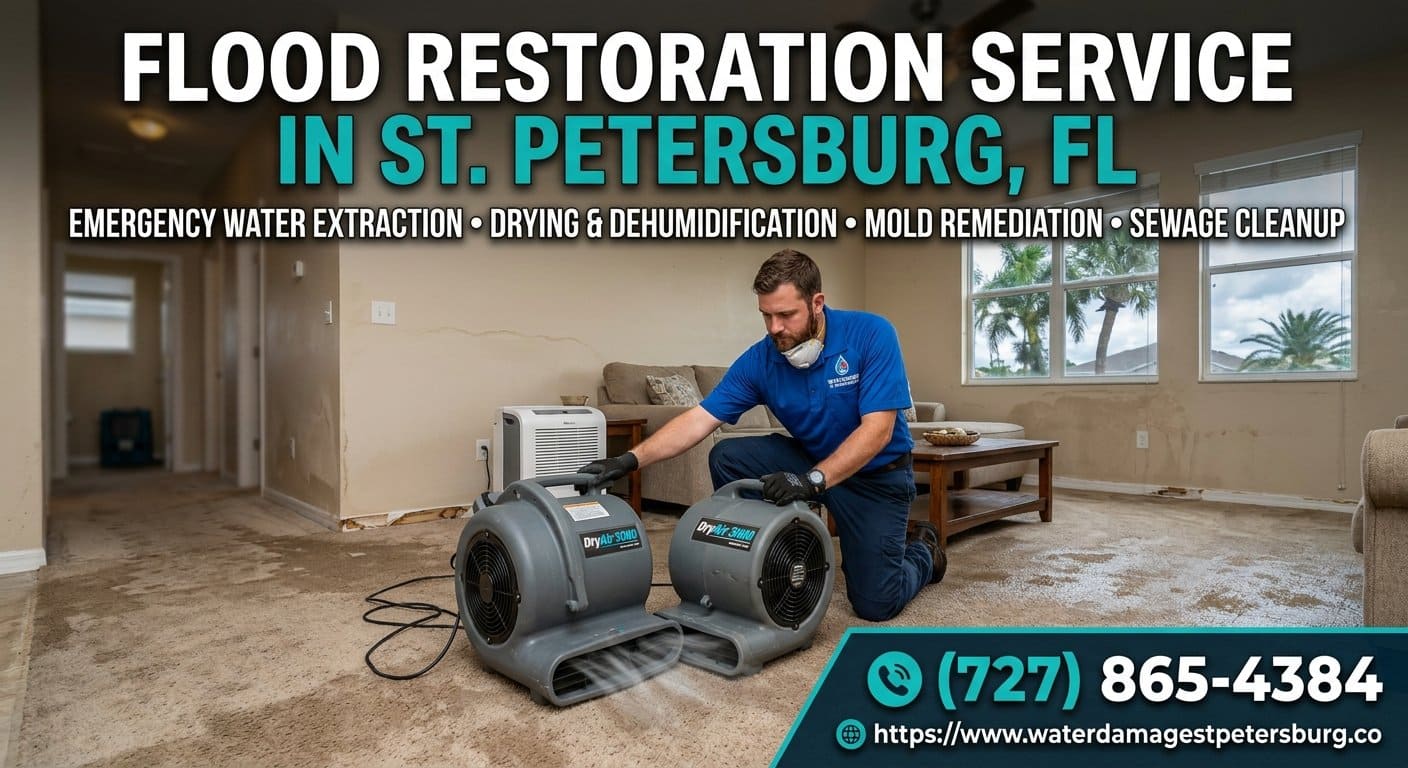
Flood Restoration for Tampa Bay Weather Realities
St. Petersburg, FL, USA takes hits from tropical rain, king tides, and the occasional surge. When flood water crosses your threshold, UAC Water Damage St. Petersburg helps you get from wet and unsafe to dry and documented.
Flood water is not the same as a clean indoor leak. It picks up sediments, lawn chemicals, and bacteria from streets and drains. That changes how we remove materials, how we sanitize, and how long drying takes in our sticky Gulf Coast air.
We work Shore Acres, Snell Isle, Downtown, Old Northeast, Jungle Prada, Maximo, Coquina Key, Pinellas Point, Historic Kenwood, Tyrone, Crescent Heights, Roser Park, Lakewood Estates, and the rest of the city. Call (727) 865-4384 when it is safe to re-enter.
Types of Flooding We See Locally
Heavy rain and street flooding
Summer cells and stalled fronts dump inches fast. Storm drains back up, and water sheets into garages and ground-floor living areas, especially near low curb lines in older neighborhoods.
Tropical storms and hurricane rainfall
Multi-day rain saturates soil and roofs. Even homes that “never flood” can take water through weep holes, under doors, or from overwhelmed gutters. Prep tips live in our hurricane season prevention guide.
Storm surge and bay push
Properties closer to Tampa Bay and Boca Ciega Bay face saltier, debris-heavy water. Salt residue needs attention on metals and concrete. Surge events almost always mean Category 3 protocols.
King tides and sunny-day flooding
High astronomical tides can push water into streets even without a named storm. Residents near Shore Acres and Snell Isle know the pattern. If that water entered living space, treat it as flood contamination, not a minor puddle.
NFIP vs Homeowners Insurance: Know the Difference
This trips up a lot of neighbors after a flood. Plain talk:
- Standard homeowners often covers sudden indoor plumbing or appliance failures, not rising flood water from outside.
- Flood insurance (frequently NFIP, sometimes private) is the usual path for storm surge, riverine, and street flooding that enters the structure.
- Wind-driven rain through a storm-damaged roof may fall under homeowners wind coverage, while ground-up flood water stays with flood policy. Mixed events need careful documentation.
- We restore and document. Your agent confirms which policy pays. Ask early so you do not delay mitigation waiting on confusion.
If the water came from a burst pipe indoors, start with emergency water damage instead. For full rebuild after drying, see water damage restoration.
Our Flood Restoration Process
1. Safety and access
We confirm structural stability, electrical hazards, and that flood water has receded enough to work. Your safety comes before any equipment.
2. Document and classify
Photos, water lines on walls, and room-by-room notes support insurance talks. Outdoor flood water is handled as contaminated.
3. Extract and remove
Pumps and extractors clear standing water. Carpet, pad, and soaked porous finishes that held flood water usually come out.
4. Clean and sanitize
Structural surfaces that remain get cleaned and sanitized for flood contamination. This step is why flood jobs differ from simple clean-water drying.
5. Dry to target
Dehumidifiers and air movers fight St. Petersburg, FL, USA humidity. We track moisture in studs and slabs until readings stabilize.
6. Rebuild handoff
Once dry, framing and finishes can be replaced. If mold appeared while water sat, we coordinate with mold remediation before closing walls.
What We Do During Flood Cleanup
- Standing water removal
- Debris and silt cleanup
- Carpet and pad tear-out when needed
- Baseboard and wet drywall removal
- Cabinet kick-plate and toe-kick checks
- Antimicrobial treatment of structures
- Commercial drying equipment setup
- Moisture logging for claims
Cost Factors for Flood Jobs
Flood restoration pricing flexes with depth and contamination. Rough planning ranges for St. Petersburg, FL, USA homes:
- Garage and utility area only: often lower thousands if finishes are limited
- One to three living rooms with flooring removal: commonly mid thousands
- Whole first floor gut to studs after surge: frequently five figures before reconstruction
- Saltwater surge can add metal corrosion checks and longer cleanup time
We would rather give you a walkthrough number than a vague website price that ignores your water line height. Call (727) 865-4384 for an on-site look.
Local Flood Challenges in St. Petersburg, FL, USA
Concrete slab homes common around Lakewood Estates and Tyrone can hide moisture along the slab edge for days. Raised or pier homes near coastal pockets may have different under-floor drying needs. Older plaster walls in Roser Park and Historic Kenwood dry differently than modern drywall. Condos Downtown may require association approval before hallway equipment or shared-wall cuts.
Heat and humidity after a storm make mold timelines shorter than inland northern climates. If you already smell must or see spotting, read mold after water damage and get remediation on the calendar.
Flood Response Checklist
- Wait for official all-clear before entering a flooded structure.
- Wear boots and gloves. Flood water is not bath water.
- Photograph water lines and damaged contents before discarding.
- Call your flood insurer if you carry NFIP or private flood coverage.
- Contact UAC at (727) 865-4384 for extraction and sanitizing.
- Move salvageable items to a dry zone upstairs or off-site.
- Follow the hour-by-hour advice in our first 24 hours article.
When Flood Work Turns Into Full Restoration
Mitigation gets water and contamination under control. Reconstruction puts the home back together: new flooring, drywall, baseboards, paint, and sometimes cabinetry. UAC Water Damage St. Petersburg bridges both through our water damage restoration process so you are not stuck coordinating five vendors while still living out of a suitcase.
Frequently Asked Questions
Does homeowners insurance cover flood restoration in St. Petersburg, FL, USA?
Usually not for rising water, storm surge, or street flooding. Those events typically need a separate flood policy such as NFIP or private flood. Indoor plumbing failures are a different coverage question. Confirm with your agent.
Is flood water considered Category 3?
Outdoor flood water that enters a home is generally treated as Category 3 because it can carry soil, chemicals, and pathogens. We plan extraction, disposal, and sanitizing with that in mind.
How soon should flood cleanup start after water recedes?
As soon as it is safe. In St. Petersburg, FL, USA humidity, waiting days can allow mold on wet drywall and framing. Call (727) 865-4384 once access is safe.
What does flood restoration typically cost?
Limited flooding may land in the low thousands. Whole-home surge with gutting often reaches five figures before rebuild. Depth, room count, and materials drive the number. We quote after a walkthrough.
Can you help with documentation for an NFIP claim?
We provide photos, moisture maps, and a written mitigation scope. That helps you and your adjuster. We do not guarantee what NFIP will pay, but clear records speed the conversation.
Which neighborhoods flood most often?
Coastal and low pockets such as Shore Acres, Snell Isle, parts of Downtown, Jungle Prada, Maximo, Coquina Key, and Pinellas Point see tide and surge issues. Inland areas like Tyrone and Historic Kenwood can still flood from heavy rain and drains.
Will you sanitize after flood water leaves?
Yes. After extraction and removal of unsalvageable porous materials, we clean and sanitize remaining structural surfaces appropriate for contaminated flood water before final drying.
Flooded and ready for a crew? Call UAC Water Damage St. Petersburg at (727) 865-4384. We serve St. Petersburg, FL, USA around the clock.
Flooded Home? We Can Help
24/7 flood restoration across St. Petersburg, FL, USA.