First 24 Hours After a Flood in St. Petersburg
St. Petersburg, FL, USA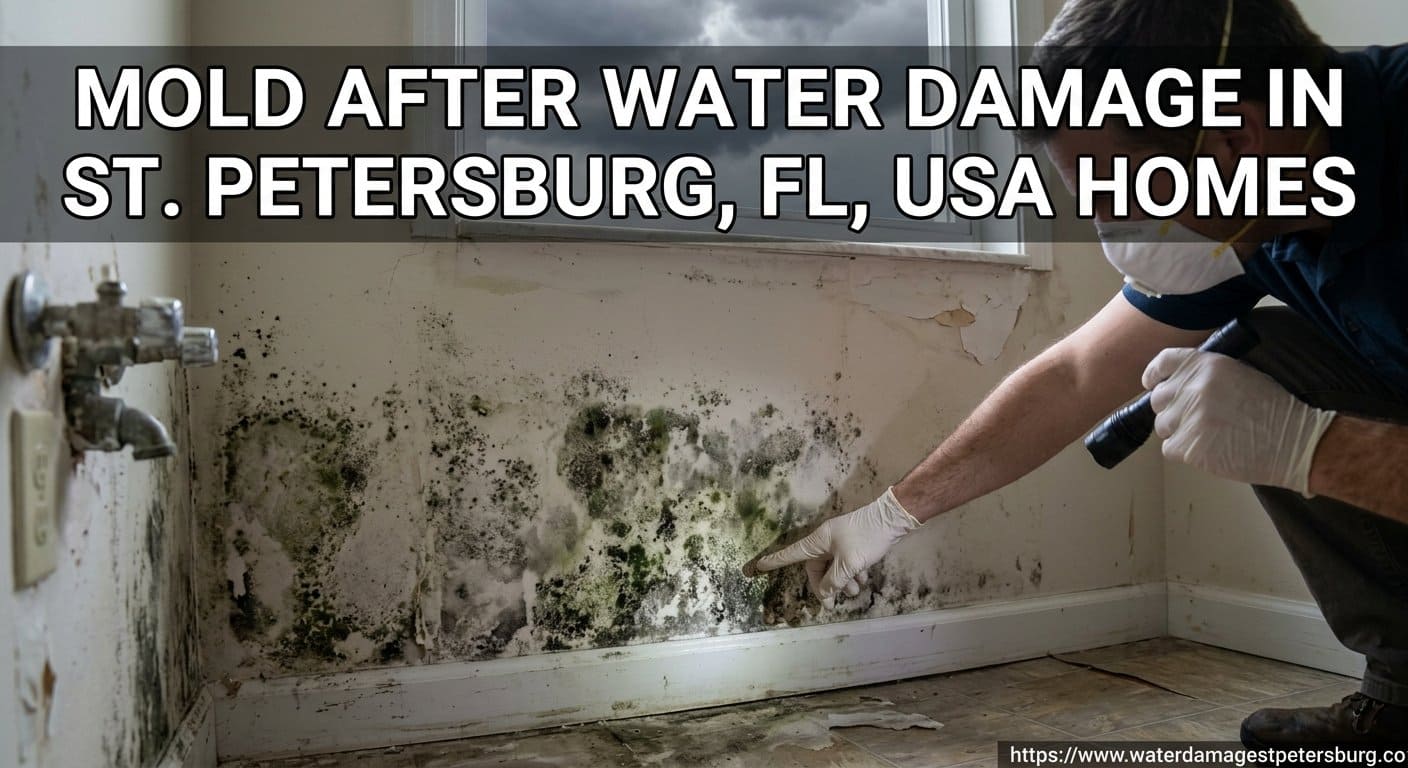
- UAC Water Damage St. Petersburg
Mold After Water Damage in St. Petersburg, FL, USA Homes
St. Petersburg sits on a peninsula where bay air keeps indoor humidity stubbornly high. When a pipe bursts, a roof leaks during a summer storm, or flood water crosses a threshold, mold is not a distant possibility. It is often the next problem if materials stay damp.
This article explains why mold follows water events so quickly here, what homeowners in Old Northeast, Snell Isle, Shore Acres, Downtown, Kenwood, and Tyrone should watch for, and how drying and professional mold remediation protect your home. For help anytime, call UAC Water Damage St. Petersburg at (727) 865-4384.
Why Mold Thrives After Water Events in St. Petersburg
Mold needs moisture, organic material, and time. Florida drywall paper, wood framing, carpet backing, and dust inside wall cavities give spores plenty to feed on. Outdoor air near Tampa Bay often carries enough moisture that a closed house after a leak stays in a growth friendly range even when you think the floor feels dry.
Air conditioning helps, but only when the system runs and ducts are not spreading damp air from a wet closet or crawl space. After tropical rain bands, many owners shut windows and wait for power restoration. That pause is when hidden moisture in base cabinets, under vinyl plank, and behind baseboards starts the colonization clock.
UAC Water Damage St. Petersburg responds to these jobs year round. The pattern is familiar: a small supply line leak under a Kenwood kitchen sink, a washing machine hose failure in Tyrone, or surge related dampness on a Shore Acres ground floor. Surface wiping looks fine for a day or two. Then a musty smell appears, and dark spotting shows up on the back of a toe kick or the lower edge of drywall.
Common Water Sources That Lead to Mold
Clean water leaks that still feed mold
Category 1 water from a supply line or overflowing tub still soaks porous materials. In humid St. Petersburg weather, that moisture rarely evaporates evenly. Insulation in exterior walls holds water longer than open floor space. If you had a pipe break overnight, treat it as an emergency water damage event, not a wait and see project.
Gray and black water after floods
Street flooding, storm surge, and sewage backups introduce contaminants along with moisture. Mold is only one concern. Materials often need removal rather than drying in place. Our flood restoration process addresses extraction, sanitation, and structural drying so remaining materials do not become a long term mold source.
Slow leaks that nobody notices
AC condensate lines, refrigerator supply lines, and shower pan failures can drip for weeks. Historic bungalows in Old Northeast and Downtown sometimes hide plumbing in tight cavities. By the time staining reaches a ceiling, mold may already occupy the cavity. Moisture meters and infrared scans help locate what paint cannot show.
If you smell mildew after any water event in St. Petersburg, assume moisture remains somewhere you cannot see. Fans alone rarely dry wall cavities. Call for a moisture check before the smell becomes visible growth.
UAC Water Damage St. PetersburgWarning Signs Homeowners Should Not Ignore
Musty odor is the earliest clue in many homes. It often concentrates in closets, bathrooms, or rooms that flooded even briefly. Look for spotting on drywall, discoloration on baseboards, bubbling paint, and soft spots when you press gently on lower walls. Warped shoe molding and cupping wood floors also point to lingering moisture.
Health cues matter too. If family members feel better outdoors and worse overnight in a damp room, take that seriously. People with asthma or allergies may react sooner. Do not dig into walls without guidance when growth is extensive. Disturbing colonized materials can release spores into living space.
Check areas that dry last: under kitchen and bath cabinets, behind refrigerators, inside vanity toe kicks, under stair landings, and along exterior walls that face bay winds. Snell Isle and Shore Acres homes with lanais often see moisture wicking under sliding doors. Kenwood homes with original hardwood may show edge staining long before mold is obvious on the face of the board.
The Critical First Days After a Leak or Flood
Mold prevention starts with water removal. Extract standing water, remove soaked rugs and soft goods, and get moisture out of structural materials. Box fans move surface air. They do not replace dehumidifiers and air movers sized for the room load. In St. Petersburg summers, outdoor air can be so humid that opening windows does little to dry a wet wall.
Document everything with photos for insurance. Note when the leak started and when you shut off water. Keep invoices and moisture readings if a contractor provides them. Then decide what can be dried in place and what must be removed. Our water damage restoration teams make those calls on site based on category of water, material type, and how long wetting lasted.
If the event was a flood, follow a structured first day plan. Our guide on the first 24 hours after a flood covers safety, documentation, and when to call for extraction. Delay is the most expensive choice for porous materials in this climate.
Neighborhood Patterns Across St. Petersburg
Old Northeast and Downtown
Older plaster and drywall combinations, tight lots, and tree shade keep homes cooler and damper. Crawl spaces and unfinished basements in some older properties hold humid air after storms. Focus on attic leaks, bathroom plumbing, and any prior ceiling stains that were painted over without drying the cavity.
Snell Isle and Shore Acres
Waterfront exposure means surge and wind driven rain. Even light flooding that looks like a wet garage can raise relative humidity in adjacent living rooms for days. Salt and sediment complicate cleanup. Materials that contacted outdoor flood water often need more than household cleaning before they are safe to keep.
Kenwood and Tyrone
Bungalows and ranch homes with slab foundations show mold along bottom plates and inside lower cabinets after appliance leaks. Carports and screened porches can drive rain toward exterior doors. After hurricane bands, check every room that sat under a roof valley or near a gutter failure. Prep tips in our hurricane season prevention guide reduce how often these events start.
What Professional Remediation Involves
Proper mold work is not a quick wipe. Technicians assess the water source, measure moisture, and set containment so spores do not move into clean rooms. Contaminated porous materials may be removed. Remaining surfaces are cleaned with methods suited to the material, then the structure is dried to target moisture levels.
Air filtration during the job protects occupied spaces. After remediation, verify that the original leak is fixed. Otherwise mold returns. Coordinating drying with remediation is why calling one responsive team helps. UAC Water Damage St. Petersburg handles the water emergency first, then supports mold cleanup when growth is present. Learn more on our mold remediation service page.
When a small DIY clean is reasonable
A tiny spot on nonporous tile after a brief splash can often be cleaned with appropriate cleaners and full drying. Growth larger than a few square feet, growth inside walls, or any mold tied to sewage or flood water deserves professional attention. If you are unsure, call (727) 865-4384 for guidance. We would rather talk you through a small issue than meet you after a larger spread.
Protecting Indoor Air While You Wait for Help
Leave the wet area if odors are strong. Limit foot traffic that tracks spores. Do not run the central HVAC if you suspect duct contamination from a flood. Avoid painting over staining. Paint seals in moisture and hides the problem without stopping growth. Keep pets and kids away from visible mold.
If power is on and rooms are only lightly damp, running a dehumidifier in a closed room can help while a crew is en route. Still call promptly. Equipment placement and containment matter when growth is already visible.
Insurance, Documentation, and Realistic Timelines
Many homeowners policies in St. Petersburg cover sudden water discharge and resulting mold remediation within policy limits. Gradual leaks and flood from rising water often follow different rules. Photograph every stage: standing water, removed materials, and dried cavities. Keep a written timeline.
Drying can take several days depending on materials and outdoor humidity. Remediation length depends on how far growth traveled. Rushing rebuilds before moisture targets are met is how callbacks happen. A careful sequence costs less than rebuilding twice.
Prevention Habits That Lower Future Mold Risk
- Fix roof and plumbing leaks the same week you find them.
- Keep indoor humidity in a healthy range with AC and dehumidification when needed.
- Clean gutters and keep water draining away from slabs.
- Inspect under sinks and around water heaters every few months.
- After any water event, verify materials are dry below the surface, not only on top.
- Save (727) 865-4384 for 24/7 response across St. Petersburg, FL, USA.
Frequently Asked Questions
How fast can mold grow here after water damage?
Within 24 to 48 hours on porous materials is common when moisture remains and indoor air stays warm and humid. That is why same day extraction matters in St. Petersburg.
Is black mold the only kind that matters?
No. Many species grow after water damage. Color alone does not tell you the risk. Any active growth after a leak deserves attention, especially in bedrooms and living areas.
Can I stay in the house during remediation?
It depends on the size of the affected area and containment setup. Small jobs may allow occupancy with sealed work zones. Larger projects may require temporary relocation of sleeping areas. We explain options clearly when we assess the home.
What if mold returns after cleaning?
Returning growth usually means moisture remains or the original leak was not fixed. Address the water source and recheck moisture levels before cosmetic repairs.
Call for Help Before Mold Takes Hold
Water damage and mold are linked problems in St. Petersburg, FL, USA. Fast drying protects finishes, indoor air, and your budget. UAC Water Damage St. Petersburg is available 24/7 for extraction, structural drying, flood related cleanup, and mold support.
Call (727) 865-4384 or visit our contact page when you smell mildew, see spotting, or just finished a leak and want confirmation that materials are dry. Serving Old Northeast, Snell Isle, Shore Acres, Downtown, Kenwood, Tyrone, and throughout the city.
Need Help Now?
Smell mildew after a leak? We respond 24/7 across St. Petersburg.
Call (727) 865-4384Popular Posts
Our Services
Tags
Mold After a Leak?
Call UAC Water Damage St. Petersburg for drying and mold support 24/7 in St. Petersburg, FL, USA.